
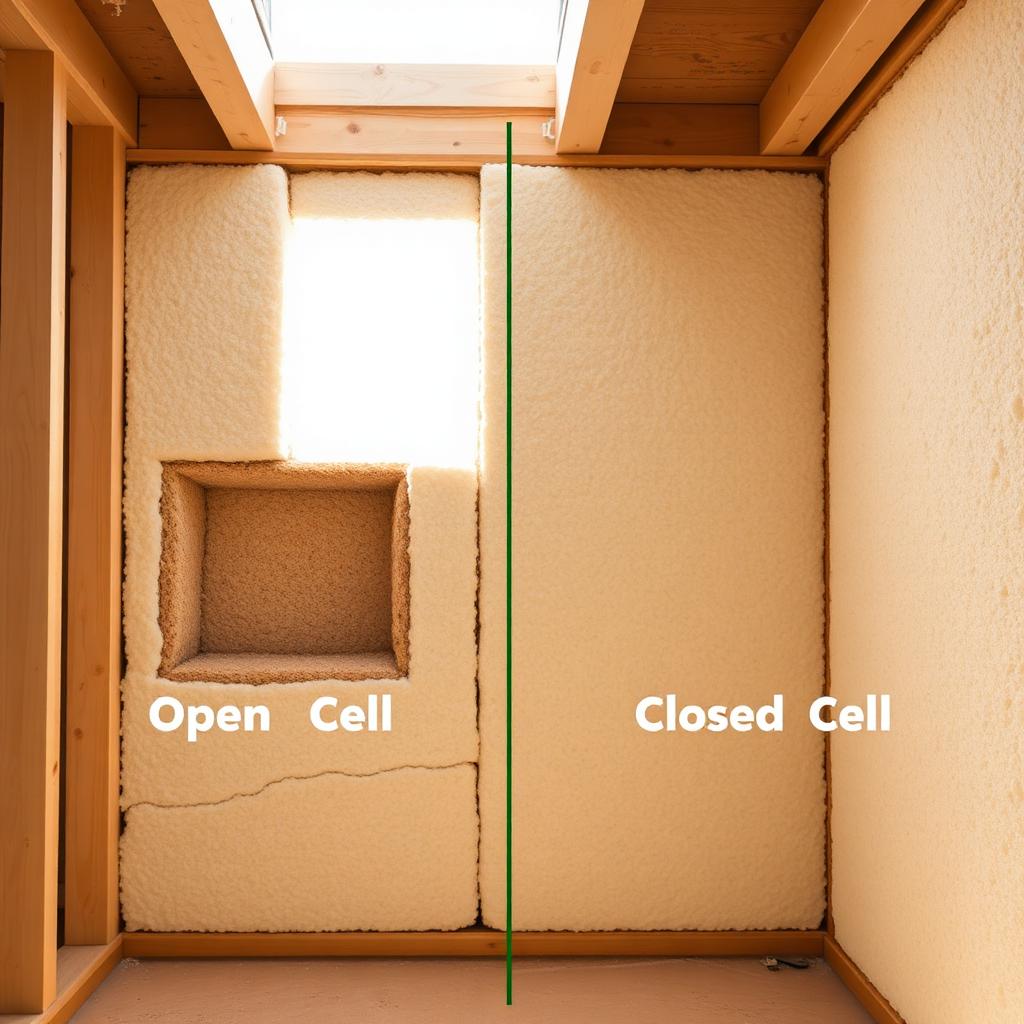
When it comes to spray foam insulation, one of the first decisions homeowners face is choosing between open cell and closed cell foam. Both offer excellent insulation properties, but they serve different purposes and perform differently depending on the application. Here in South Texas, making the right choice can mean the difference between a comfortable, energy-efficient home and one that struggles to keep up with the heat.
What Is Open Cell Spray Foam?
Open cell spray foam is a lighter, more flexible type of insulation with a sponge-like texture. The cells in the foam are not completely closed, which allows air to fill the spaces inside the material. This gives open cell foam a lower R-value per inch — typically around R-3.5 to R-3.7 — compared to closed cell foam.
Despite the lower R-value, open cell spray foam has several advantages. It's excellent at sound dampening, making it a popular choice for interior walls and between floors. It's also more affordable per square foot than closed cell foam, which can make it a cost-effective solution for large projects where moisture resistance isn't the primary concern.
Open cell foam expands significantly when applied — up to 100 times its original volume — which means it fills cavities and hard-to-reach areas thoroughly. This expansion also means it uses less material per application, contributing to its lower cost.
What Is Closed Cell Spray Foam?
Closed cell spray foam is a denser, more rigid insulation material. The cells in the foam are completely closed and packed tightly together, creating a solid barrier against air, moisture, and even structural movement. Closed cell foam delivers an R-value of approximately R-6 to R-7 per inch, making it one of the highest-performing insulation materials available.
One of the standout features of closed cell spray foam is its moisture resistance. Because the cells are fully closed, water vapor cannot pass through the material. This makes it an ideal choice for areas prone to moisture intrusion, such as crawl spaces, basements, and exterior walls. In South Texas, where humidity levels can be extreme, this moisture barrier is particularly valuable.
Closed cell foam also adds structural rigidity to walls and roofs. Once cured, it becomes a hard, dense layer that can improve the overall strength of the building envelope. This can be especially beneficial for metal buildings, pole barns, and older structures that need additional reinforcement.
Key Differences at a Glance
R-Value: Closed cell offers nearly double the R-value per inch compared to open cell. If you need maximum thermal resistance in a limited space, closed cell is the clear winner.
Moisture Resistance: Closed cell acts as a vapor barrier, while open cell is permeable to moisture. For areas exposed to rain, flooding, or high humidity, closed cell provides superior protection.
Cost: Open cell is generally 30-50% less expensive than closed cell per square foot. For budget-conscious projects where moisture isn't a major concern, open cell delivers excellent value.
Sound Dampening: Open cell foam outperforms closed cell for noise reduction. Its flexible, spongy structure absorbs sound waves more effectively.
Structural Support: Closed cell foam adds rigidity and can strengthen walls and roofing. Open cell does not provide meaningful structural benefit.
Which One Should You Choose in South Texas?
For most South Texas homes, we recommend a combination approach. Closed cell foam is ideal for exterior walls, rooflines, and any areas exposed to moisture or extreme heat. Open cell foam works beautifully for interior walls, between floors, and in attic spaces where sound dampening is desired.
If you're insulating a metal building, barn, or commercial structure, closed cell is almost always the best choice. The moisture resistance and structural support it provides are critical for these applications in our humid climate.
For residential attics — one of the most common insulation projects we handle — either option can work well. Closed cell provides a tighter seal and better moisture protection, while open cell offers cost savings and excellent coverage.
Let DTF Spray Foam Help You Decide
Every home and building is different, and the best insulation solution depends on your specific needs, budget, and goals. At DTF Spray Foam, we've helped hundreds of South Texas homeowners and business owners choose the right spray foam for their projects. We'll assess your property, discuss your priorities, and recommend the solution that delivers the best long-term value.
Ready to learn more? Contact us today for a free, no-obligation estimate. We'll help you make the right choice for your South Texas home.
Ready for a Free Estimate?
Contact DTF Spray Foam today — South Texas' most trusted insulation experts.